
Canada terminology
Use resume terminology, optimized spelling where relevant, and section names that read naturally in Canada.
This Canada-focused resume example shows data analysts how to balance SQL, reporting, and business context in a way that fits Canadian hiring expectations without sounding imported from a generic US template.
Quick answer
Use this page when you want a canada resume example that keeps the role-specific evidence from the main RezumAI library but differentiates the wording, structure, and conventions for this local market.
Jump directly to the examples, mistakes, and supporting details that match this search intent.
International guidance
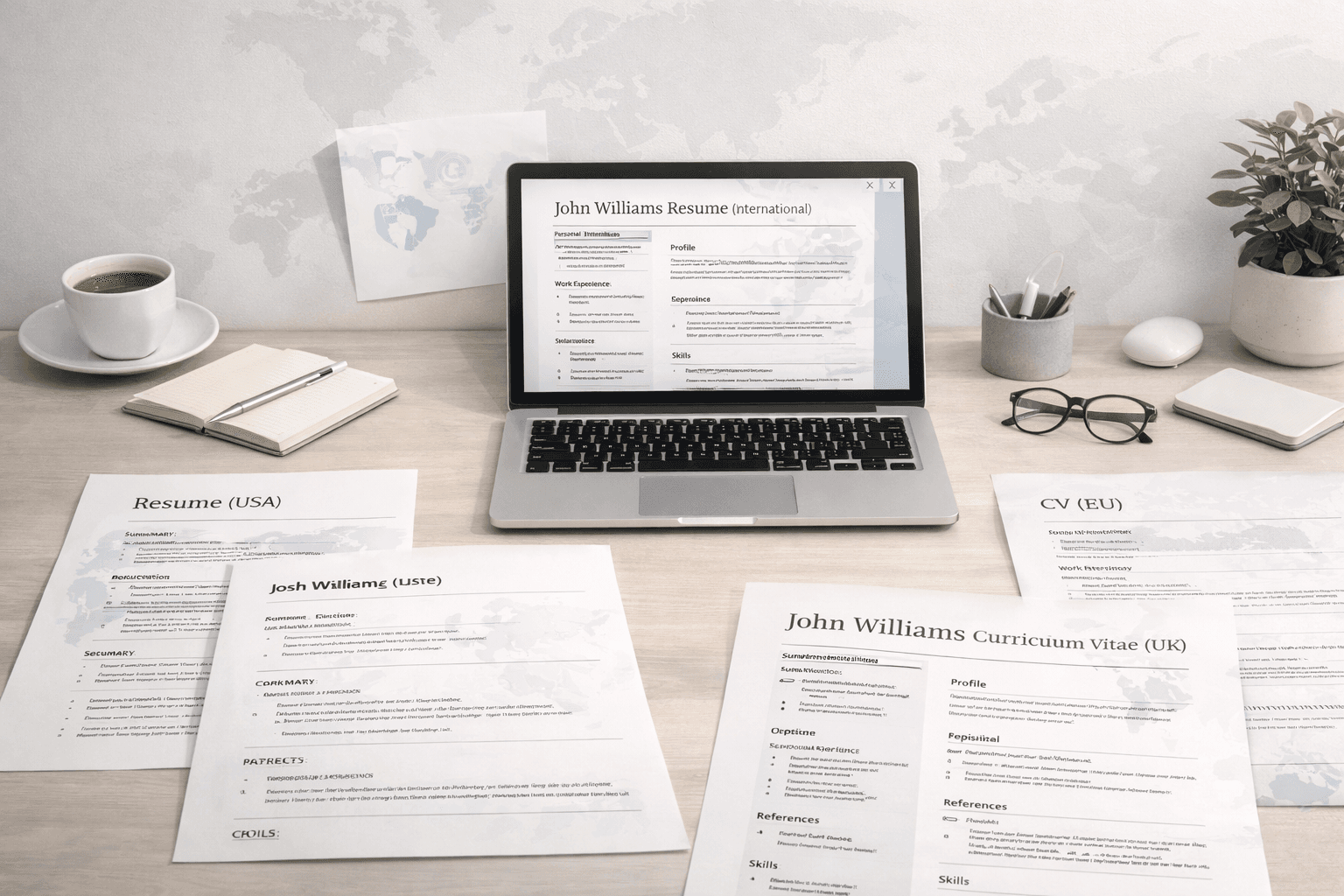
These pages use one image family to signal that the content is tailored for local resume or CV conventions, not translated or duplicated lightly.
Use these cards to get the role-specific signal before you start rewriting the resume.
Canada terminology
Use resume terminology, optimized spelling where relevant, and section names that read naturally in Canada.
Role proof
Keep the top evidence focused on turning raw data into business decisions with clear reporting, trustworthy analysis, and practical recommendations so the document reads like a targeted data analyst application rather than a generic profile.
Next step
Use the linked ATS, skills, summary, and template pages to turn the guidance into an editable draft inside RezumAI.
Next action
Check ATS fit
Use the ATS workflow to refine keywords, formatting, and targeting.
Next action
Build a live draft
Move from research into the builder without losing the structure from this page.
Compare adjacent examples, resume guidance, and supporting pages before you start editing so you stay inside the same topic cluster.
Canada Resume examples hub
Move back to the country hub to compare this page with the other high-priority canada role examples.
Canada Resume format
Review the local structure and naming conventions before you finalise the document.
Data Analyst ATS keywords
Use the role's ATS keywords to align language without turning the page into keyword stuffing.
SQL resume skills
Strengthen the data analyst resume with sharper skill evidence.
Excel resume skills
Strengthen the data analyst resume with sharper skill evidence.
Data And Analytics summary examples
Use the supporting summary guidance when the opener needs a better role-specific angle.
Canadian hiring teams still want concise resumes, but they often expect clearer credential context and a practical balance between ATS language and readable proof. For data analyst candidates, that means the opening needs to make turning raw data into business decisions with clear reporting, trustworthy analysis, and practical recommendations obvious without wasting space on generic career-summary filler.
This page is intentionally different from the generic role example because it layers local terminology, structure, and convention choices on top of the same role-specific evidence standard.
Hiring teams still want proof, not only keywords. Start from the work that shows turning raw data into business decisions with clear reporting, trustworthy analysis, and practical recommendations, then organise the evidence so it is easy to skim under local resume expectations.
The strongest pages surface the work scope, tools, certifications, and outcomes that matter most for this role instead of treating the document like a generic experience dump.
A country-specific page should sound native to the market. That means using section names employers already recognise and keeping optional details subordinate to relevance.
For this role, the most reliable section path is Professional Summary, Work Experience, Education, Technical Skills, Certifications. Adapt the order only when the evidence for data analyst roles clearly benefits from it.
The ATS layer still matters, but the copy has to read like a serious application document. Use the language below as a signal source, then connect it to actual work scope and results.
Most weak international pages fail because they swap one headline term and leave the rest untouched. Recruiters still notice when the language, structure, or optional detail choices feel imported from another market.
For Canada, use resume as the main document label on this page. That aligns the content with local search behaviour and with the way employers usually describe the application document.
Canadian resumes are usually one to two pages depending on seniority, with room for credentials and region-specific context when it adds hiring relevance. For data analyst roles specifically, use the extra space only when it helps you show outcomes, certifications, or scope that materially changes hiring confidence.
Prioritise turning raw data into business decisions with clear reporting, trustworthy analysis, and practical recommendations. Then layer in local conventions around section names, optional personal details, and any role-specific credentials so the finished resume feels written for Canada rather than copied from a generic template.
Use the Canadian guidance, clean structure, and ATS support to build a stronger local-market resume.