
1. Professional Summary
Use this heading when it matches the evidence you need to show for the target role in Canada.
This guide explains how to structure a canada resume so the final document matches local expectations on length, section names, and relevance without drifting into thin copy or imported conventions that do not fit the market.
Why this page exists
Use the format page when you want country-specific structure guidance first, then move into the matching role pages once the layout and terminology decisions are clear.
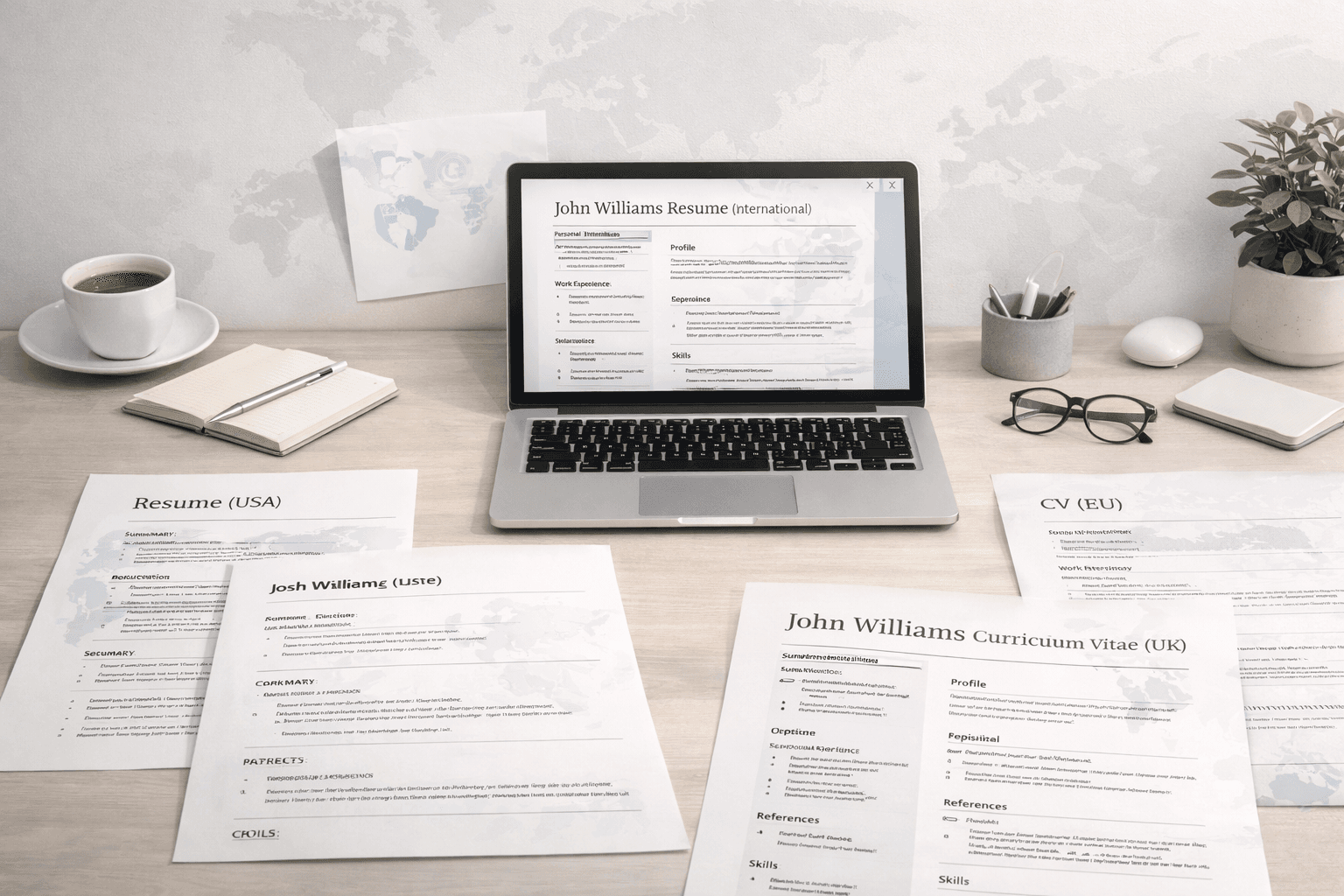
International guidance
These pages use one image family to signal that the content is tailored for local resume or CV conventions, not translated or duplicated lightly.
Canadian hiring teams still want concise resumes, but they often expect clearer credential context and a practical balance between ATS language and readable proof. The format matters because recruiters use it as an immediate credibility check before they read deeply into the bullet points.
A strong canada resume is still outcome-led, but the document feels more trustworthy when the length, headings, and optional detail levels reflect local norms from the start.
The safest structure uses section names employers already recognise. That keeps the page natural for readers and prevents unnecessary friction in ATS parsing or recruiter skim behaviour.
Use this heading when it matches the evidence you need to show for the target role in Canada.
Use this heading when it matches the evidence you need to show for the target role in Canada.
Use this heading when it matches the evidence you need to show for the target role in Canada.
Use this heading when it matches the evidence you need to show for the target role in Canada.
Use this heading when it matches the evidence you need to show for the target role in Canada.
Country-specific credibility is often lost through small formatting mistakes rather than through missing experience. Optional details should stay subordinate to relevance, clarity, and evidence.
Once the overall structure is set, the next step is a role page that shows how the same format should adapt for software, healthcare, operations, finance, or customer-facing roles.
That is where the country layer becomes more than terminology: the examples show what emphasis, skills, and proof matter most for the role itself inside this market.
These supporting pages help you keep building, editing, and learning from the most relevant next step.
Canada Resume examples hub
Start with the country hub when you want role-specific examples and stronger internal paths into the rest of the library.
Software Engineer Resume example
Review a canada resume example for software engineer candidates.
Data Analyst Resume example
Review a canada resume example for data analyst candidates.
Project Manager Resume example
Review a canada resume example for project manager candidates.
Registered Nurse Resume example
Review a canada resume example for registered nurse candidates.
Customer Service Representative Resume example
Review a canada resume example for customer service representative candidates.
Generic resume examples hub
Use the main hub when you want broader role coverage beyond the initial international rollout.
Resume builder
Apply the format guidance inside a live draft.
Start with Professional Summary, then use the core sections that employers in Canada expect: Professional Summary, Work Experience, Education, Technical Skills, Certifications. Adjust the order only when the target role makes another section more decision-relevant.
Usually no. In Canada, recruiters generally assume you can provide references later, so the line rarely adds value.
For Canada, keep the document focused on hiring-relevant signal. Photo: discouraged. Address: include only the level of location detail the role really needs. Date of birth: discouraged.
Use the Canadian guidance, clean structure, and ATS support to build a stronger local-market resume.